Walden Tempo Learning vs course-based nursing
Tempo Learning is Walden's competency-based, self-paced, subscription-billed format. Course-based is the traditional term-by-term format with set start dates. The format you can choose is decided by your specialization: every nurse practitioner track (FNP, PMHNP, AGPCNP, AGACNP, and Pediatric Primary Care NP) is course-based only. Tempo is offered for three non-NP specializations: Nursing Education, Nurse Executive, and Nursing Informatics.
Last updated: June 22, 2026 · Reviewed by the Walden Preceptor placement team
Start your placement, free
Tell us your program. We map the whole practicum. No payment until you are matched.
The two formats at a glance
Both formats lead to the same Walden degree. Walden states that students earn the same degree whether they choose the course-based or the competency-based modality. What changes is how you move through the program and how you pay.
| Course-based | Tempo Learning | |
|---|---|---|
| How you progress | Term-based courses with set start dates and due dates | Competencies and assessments you pass when ready, self-paced |
| Billing | Tuition per course or credit | Flat-rate subscription, billed in three-month periods |
| Pace | Set by the course calendar | Set by you, faster finishing can lower total cost |
| NP specializations | Yes, all five | None |
| Non-NP MSN options | Available | Nursing Education, Nurse Executive, Nursing Informatics |
Sources: Walden MSN nursing catalog and the Tempo Learning program pages, listed below.
What Tempo Learning actually is
Tempo Learning is Walden's competency-based education model. Instead of sitting in a fixed course for a set number of weeks, you work through competencies and pass rigorous assessments that show you have mastered the material. When you can demonstrate the skill, you move on. That is why it is described as self-paced: a motivated student who has time can move quickly, and someone with a busy season can slow down without falling behind a cohort.
The billing matches that idea. Tempo uses a flat-rate subscription model, billed in three-month subscription periods that begin on the next monthly start date. Your total program cost depends on the competencies you still need and how many you complete in each period, so finishing more in a period can lower the total cost of the degree. Walden does not publish a single sticker price for this, so confirm current subscription pricing with an enrollment specialist before you commit.
Why every NP track is course-based
This is the part that trips students up, so it is worth being plain about it. Tempo Learning is offered for exactly three nursing specializations: Nursing Education, Nurse Executive, and Nursing Informatics. None of those is a nurse practitioner track.
If you are pursuing any of the five NP specializations, you are in a course-based program. There is no Tempo option for:
- Family Nurse Practitioner (FNP)
- Psychiatric-Mental Health Nurse Practitioner (PMHNP)
- Adult-Gerontology Primary Care NP (AGPCNP)
- Adult-Gerontology Acute Care NP (AGACNP)
- Pediatric Primary Care Nurse Practitioner
So if a classmate mentions paying by subscription and finishing on their own schedule, and you are in FNP or PMHNP, you are not comparing the same thing. The subscription pace they describe is not available to your specialization.
Practicum hours do not disappear in Tempo
A common assumption is that the self-paced format somehow removes clinical hours. It does not. Tempo changes the pacing and billing of the academic work, not the field-experience requirement. The three Tempo specializations still carry clinical hours that you log and that a preceptor signs off, and the placement mechanics are identical to course-based students.
Whichever format and specialization you are in, the same expectations apply:
- You secure your own preceptor and clinical site, then nominate them in Meditrek (edu.meditrek.com/waldenu/student) for approval before the relevant course or competency begins.
- Your preceptor signs off your hours and evaluations in Meditrek. You cannot register for a practicum course without an approved Meditrek application.
- You clear compliance through CastleBranch (myCB, under DISA, at walden.castlebranch.com): background check, drug screen, immunizations, and required trainings, all state-specific. Walden does not accept outside checks.
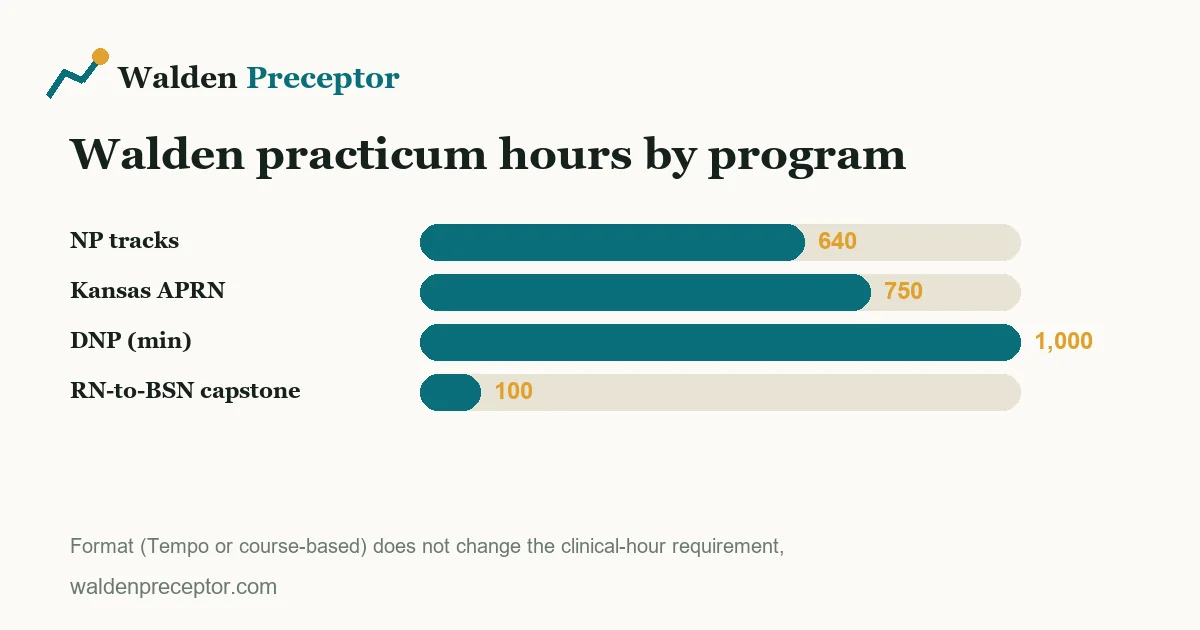
For reference, the NP tracks (all course-based) require 640 practicum hours across four 160-hour courses, with Kansas APRN students starting on or after March 1, 2025 required to complete 750 hours. The DNP requires a minimum of 1,000 post-bachelor hours, and RN-to-BSN includes a 100-hour capstone practicum plus leadership field hours. Always confirm your own program map, since course prefixes and numbering are catalog-year sensitive.
Which format should you expect?
You do not really pick the format in isolation. Your specialization decides it for you.
FAQ
Can I do an FNP or PMHNP in Tempo Learning?
Does Tempo Learning still require practicum hours?
Is the degree different if I choose Tempo instead of course-based?
How does Tempo billing work?
Sources
- Walden MSN nursing catalog (specializations and modalities)
- Walden Tempo Learning (competency-based model and subscription billing)
- Walden practicum requirements (MSN/NP hours)
- Walden Meditrek and field experience
- Walden onboarding and CastleBranch compliance
We help with the part the format never changes
Tempo or course-based, NP or non-NP, the practicum still needs a preceptor, a Meditrek-approved nomination, and a clean CastleBranch file before your hours can count. That is exactly what we handle. We match Walden students with a vetted preceptor and site, and walk you through Meditrek and compliance, so the clinical clock starts on time.
Get matched in 5 days
Tell us your specialization and term. We will map your practicum and find your preceptor, no payment until you are matched.